The rulings
Until He Finds the Butter, the Cow Is in Danger
Seven rulings on the gnome's terms of employment, and the big one says the presents used to run the other way.
By Casimir Vane The Registers · Filed Under Protest 2026-11-27
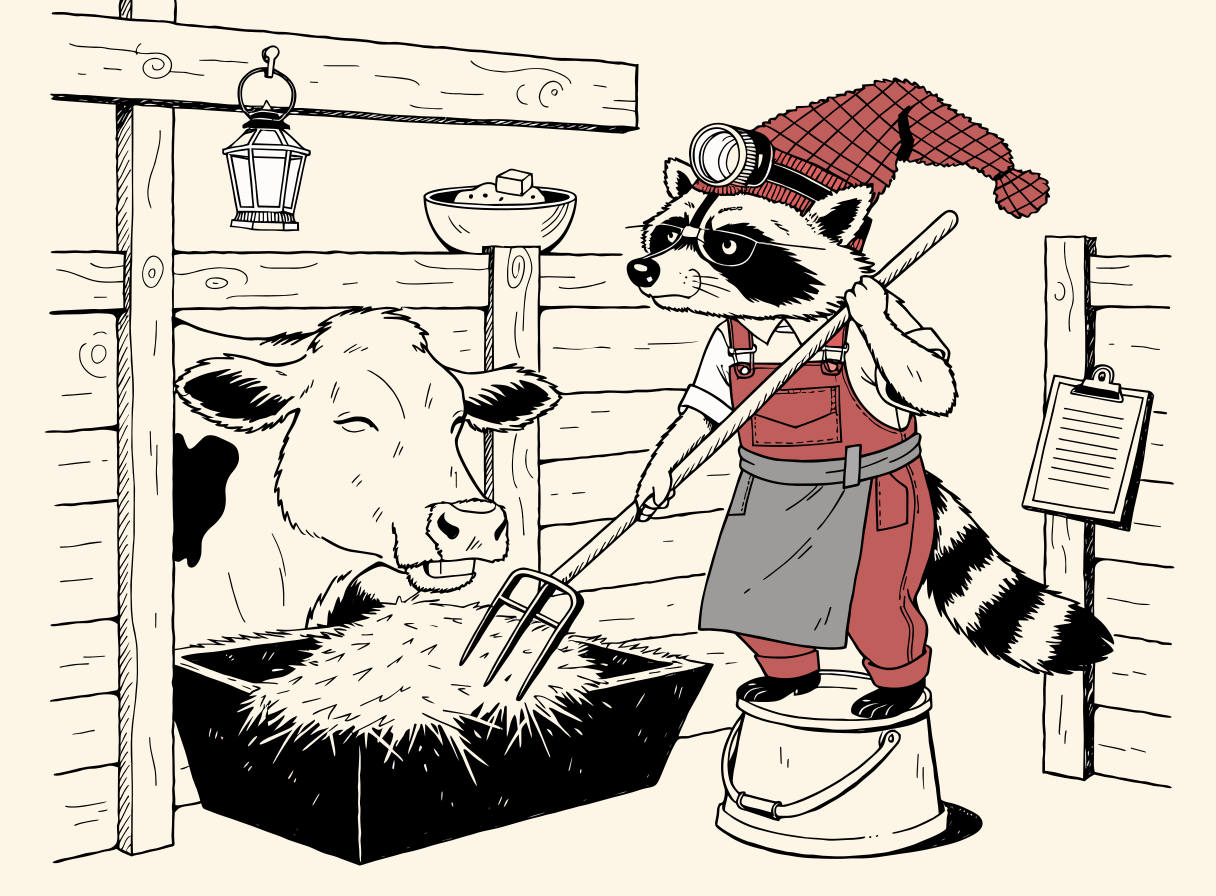
The evidence for these rulings is on the Payroll Register; this page grades it, and grades nothing else.
The grades are the paper’s, not mine. Established: the record carries the rule the same way every time and knows why. Attested: every source repeats it and none explains it. Contested: the record argues with itself, and each side has paperwork. Unsourced: somebody made it up and everyone after them copied it down. On this register only one ruling is unsourced, and it is the one on the wrapping paper.
Two rulings were dropped before print, and I would rather say so than have it found. The first was the faceless gnome, the figure in every shop this month with a hat down to his nose. The one date I could find for him is a garden centre’s, about 2015, and a retailer is not a source for a first appearance, so the garden centre is on the shelf and the figure is off the spine. The second was the beard. The secondary literature says the nisse of old lore had none, and Rydberg’s tomte of 1881 strokes his. I have not read the book the first claim rests on, and I do not rule on a book I have not read.
The rulings
On the payroll since 1818, and the presents ran the other way
Every citation is a filing on the Payroll Register. Where a filing is a garden ornament rather than a farmhand, the finding says which lineage it belongs to.
| The rumour | Verdict | The desk's finding |
|---|---|---|
| He is paid in porridge with butter | ON THE PAYROLL Established | Porridge for his service, from the first Danish collection to a 1965 picture book. The long versionThe founding rule is a pay schedule. Lex traces the first Danish collection to a nisse who protected the home so long as he had his porridge before a holiday, and its general account of the nisse gives the full terms: a dish of sweet porridge with a lump of butter, every Saturday evening and at the holidays, as wages for his service. The English collections keep the evening bowl and the butter. Andersen's nisse chooses his household on the size of the Christmas pat, and a 1965 picture book still has a child leave the plate on the step. The exception is the most famous tomte of all. Rydberg's poem names no wage, only the household's regard for his diligence, a negotiating position nobody at this paper can afford. Enters the record GN-1818-THL, where he guards the home so long as he has his porridge before a holiday Carried by Contradicted by |
| Short the butter and he kills the cow | THE BUTTER WAS AT THE BOTTOM Established | In every version on file, the butter was in the bowl all along. The long versionA grievance procedure, and in both of its main versions a misunderstanding. In Keightley a maid seems to have forgotten the butter, the Nis kills the best cow, finds the butter sunk under the porridge, and leaves a chest of money by the carcass. In Craigie the girl has put it deep, the Gaardbuk wrings the neck of a red cow, finds the butter, and brings back another red cow like it to a hair. In each the employer was not in breach and the employee made the loss good, which is more than most disputes manage. Keightley also prints the case where the butter was hidden on purpose, by a boy, and there the remedy falls on the boy. The cow has no recourse in any of them. Enters the record GN-1850-KTL, where the maid seems to have forgotten the butter Carried by |
| His work is the animals | STABLE DUTIES Established | From 1850 to 1985 the filings agree on the job description. The long versionWhatever else he does, the animals are his. Keightley's men find the horses curried and fed; Craigie's nisse stables and waters the horses when the farmer comes home from market; Rydberg's tomte walks the stalls at midnight, and Lindgren kept that walk when she cut the poem's philosophy. In 1965 he stops a fox at the hen-house. The boy in Lagerlöf who hurts the animals is the one made small enough to answer to them. A Spanish cartoon of 1985 makes the department a profession, with a fox to ride to the patients. The exception, a nisse with no livestock, lives over a grocer's shop, and his story is about which floor of the building to work on. Enters the record GN-1850-KTL, with the horses cleaned and curried by morning Carried by Contradicted by |
| At Christmas he brings the presents | THE GIFTS RAN THE OTHER WAY Unsourced | Christmas Eve was payday, and he was the one being paid. The long versionThe leading finding. In the folk record the transaction at Christmas runs from the household to the nisse: the holiday porridge, the pat of butter Andersen's nisse moves house for, the plate on the step. The gift-bringer is a later appointment, and the Danish encyclopedia names the appointing party. The painters of the period, taken with the little porridge-eating household god, gave him the honour of bringing the presents, and the first documentation of a Christmas nisse is a painter's party in 1836. Sweden followed in pictures, Nyström's among them, from 1875. Unsourced in the paper's strict sense: nobody gathered this tradition from anybody. Illustrators wrote him the role, and everyone took it. The desk, which has also been given more work and called it an honour, recognises the technique. Enters the record GN-1836-HAN, at a Danish painter's Christmas party in Rome Carried by Contradicted by |
| The garden gnome is the same creature | SAME HAT, DIFFERENT EMPLOYER Contested | The merger was performed by translators, twice. The long versionTwo lineages share a hat and a word. One is a Scandinavian farmhand with wages and a disciplinary code. The other is the German Zwerg, an ornament from a Thuringian ceramics trade, which English called a gnome when the figures reached Lamport in 1847. The word itself belonged to neither: it is Paracelsus's spirit of earth. The case for one creature is that English, and a Dutch field guide translated into it in 1977, have used one name for all of them since, and that the Scandinavian languages call a garden ornament a garden-tomte in return. The case against is what the documents on this page say each of them is for. Contested, then, and only one of the two has ever been paid. Enters the record GN-1847-ISH, where twenty-one German figures are called gnomes on arrival Carried by Contradicted by |
| The garden gnome has no duties | NO DUTIES ON FILE Established | Ornament, pest, tourist, lover, and banned from Chelsea. The long versionThe household gnome has a job description; the garden gnome has a location. He is set out in an English garden and insured, made in Thuringia and bought for allotments, removed from a garden as a chore, sent round the world to be photographed, given a feud to conduct in two back gardens, and kept out of Chelsea until its hundredth year. Nowhere in this file is he asked to do anything. The exception proves it: the gnome with a profession is a forest gnome, from the Dutch line, and he would be wasted in a garden. Enters the record GN-1847-ISH, whose survivor is insured for £1 million and has never worked Carried by Contradicted by |
| He answers to the household | WHO REPORTS TO WHOM Established | The tomte works for the house he lives in; the 2005 elf works for head office. The long versionThe reporting line is never in doubt. Keightley's Nis looks to the master's interest in every respect, the neighbours' corn included. Andersen's nisse picks his house on its terms. Rydberg's keeps the night watch for a family he has seen asleep for generations, and Lindgren's is never seen at all. The contradiction is a scout elf placed on the shelf to watch the household and report on it nightly to an employer at the North Pole. The tomte checks the locks for the family. The elf checks the family. Enters the record GN-1850-KTL, where he looks to the interest of the master of the house in every respect Carried by Contradicted by |
And an observation I am not permitted to call a finding
Overpay him and the horses freeze. In Craigie’s translation a farmer’s wife, sorry for the nisse in a hard winter, has a long coat made for him in place of his old short jacket, and the next time the farmer comes home late from market and leaves the horses to him, the nisse will not go out to them for fear of soiling it, and they are found frozen to death in the morning. One filing is not a ruling, so it is here and not in the table. Every butter tale on the register starts with the household seeming to give him too little. This one starts with a present.
Where to start reading, and the shelf I worked from, are at Selected Gnome Readings.
— Casimir Vane