The desk recommends
Selected Gnome Readings, and Where the Folklore Actually Came From
Where to start on the Payroll Register, and the folklore it was built from, most of it translated by two Victorians.
By Constance Tally The Parlour · The Lists 2026-11-27
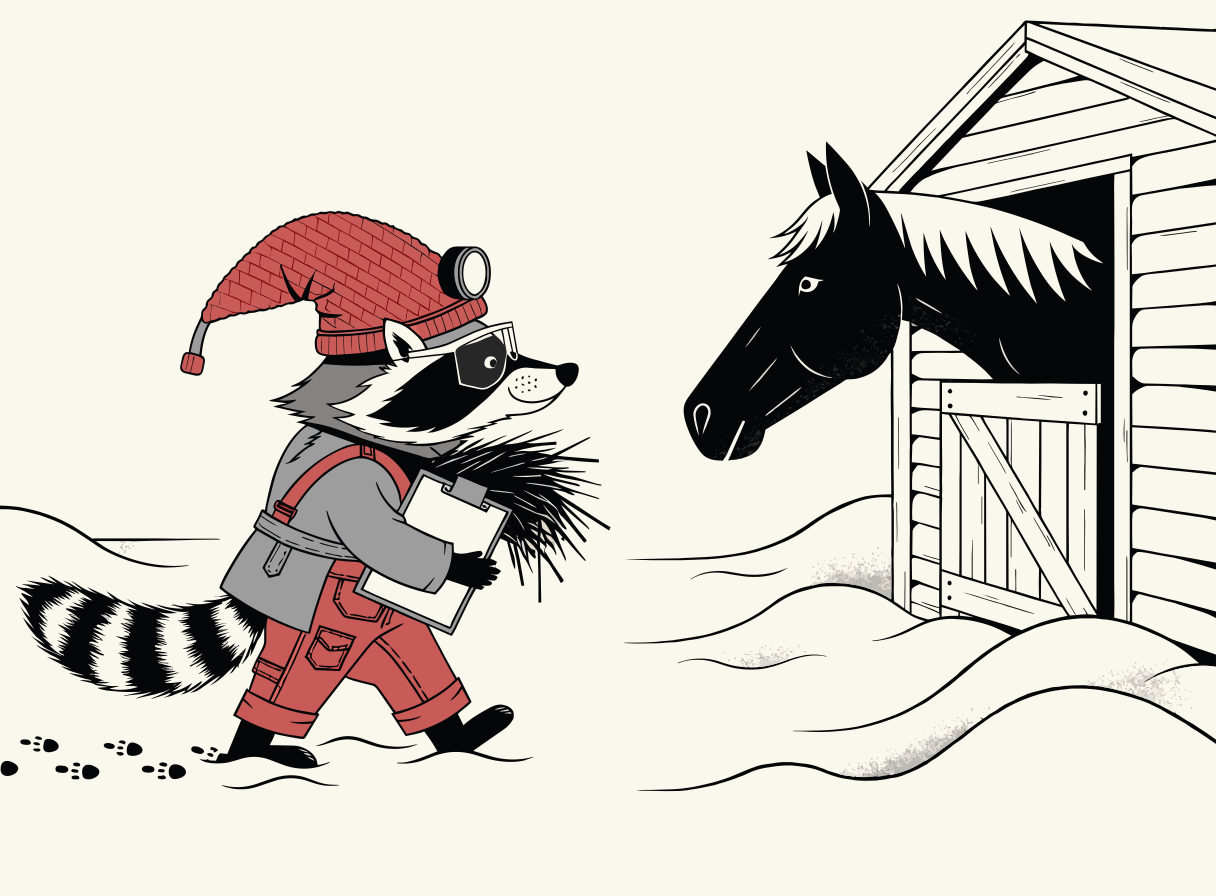
The Payroll Register runs to twenty-three filings, or twenty-two gnomes if you leave out the elf, who is filed for contrast. I counted him. Each canon entry below links straight to its card on the register.
Reading list
The canon and the shelf
The load-bearing eight
Eight filings carry the rest. Read these and the other fifteen stop being surprising.
- Danske Folkesagn J. M. Thiele · 1818
The first collection of Danish nisse legends, in which, by the Danish encyclopedia's account, he guards the home so long as he has his porridge before a holiday. Every later wage here is a version of that bowl.
- The Fairy Mythology Thomas Keightley · 1850
The duties in English, and a disciplinary code. The kitchen swept, the water in, the horses curried, and a Nis who "punishes them for any irregularity" and, being wrong about the butter once, pays for the cow.
- Nissen hos Spekhøkeren Hans Christian Andersen · 1852
A nisse who chooses between two employers in one house, and is held by the larger pat of butter at Christmas. The terms, read by somebody who knew exactly what they meant.
- Tomten Viktor Rydberg · 1881
The night rounds: every lock tried, every animal looked in on, the children checked, and a question about the generations put down each time there is work to do. No porridge, and the household's regard for his diligence in its place.
- Scandinavian Folk-Lore William A. Craigie · 1896
A settlement and an overpayment a page apart. The cow replaced to a hair; then a long coat, given out of kindness, that he will not soil on the horses, who freeze.
- Nils Holgersson Selma Lagerlöf · 1906
A disciplinary hearing. A boy who hurts the farm's animals traps its tomte, and is made small enough to answer to them.
- Tomten Astrid Lindgren and Harald Wiberg · 1960
Lindgren's own text to Wiberg's pictures, written for the foreign editions. It keeps the rounds and the animals and leaves the metaphysics out, which tells you which part of the job was essential.
- Leven en werken van de Kabouter Wil Huygen and Rien Poortvliet · 1976
A straight-faced reference work about a creature, in the apparatus of a biology book, citing a predecessor of 1580 nobody can find. The paper's ancestor, declared.
The shelf
Most of the folklore reached the register through two Victorian translators and a Danish encyclopedia. These are the books to check it against, and where nobody here has read one, the entry says so.
- "nisse", in Lex (Den Store Danske) Iørn Piø and Caroline Nyvang · 2024
Where the thesis came from: the porridge as løn, wages; Thiele as first collector; Hansen's party of 1836; the painters who made him bring the presents.
An encyclopedia entry. The register used it to find the sources, and says on each card where it went no further.
- Scandinavian Folk Belief and Legend Reimund Kvideland and Henning K. Sehmsdorf (eds) · 1988
The scholarly anthology in English. Its legend 48.4 is the butter tale from Østfold.
Known to the register by citation only. Not read.
- The Migratory Legends Reidar Th. Christiansen · 1958
The type index for Norwegian legend, and the place to check whether the coat tale is one tale or many.
Not read.
- Interpreting Legend: Danish Storytellers and Their Repertoires Timothy R. Tangherlini · 1994
The butter tale as told by particular people, which is the corrective to a register that reads it only in collections.
Not read.
- The Fairy Mythology Thomas Keightley · 1828; revised 1850
Primary for English readers, and it has its own card. The register read the 1850 text and has not compared it with the first edition.
- Scandinavian Folk-Lore William A. Craigie · 1896
Primary, and a card. Its notes name the source of each tale, which is how the register knows Keightley's butter tale is Thiele's. Craigie locates it in Thiele's extended edition of 1843.
- Gnomes Wil Huygen and Rien Poortvliet · 1977
The English edition of the field guide, and where the Dutch kabouter became a gnome on an English-language shelf.
Fiction, in the form of science. Read it for the form.
- "What is a gonk?" Sapcote Garden Centre · 2026
The faceless gnome with a hat over his eyes: the modern craft version of the tomte, it says, in British shops from about 2015 under the name of a 1960s British novelty toy. That is all the evidence the register found for a dated first appearance, and no ruling rests on it.
A retailer. A reader who can date the shape should write in.
Read them in this order, if you want one: Thiele’s terms, Keightley’s duties, Andersen’s choice, Rydberg’s rounds. The rulings graded against these filings are at The Payroll Rulings.